
What Radio Can Reach 50 Miles?
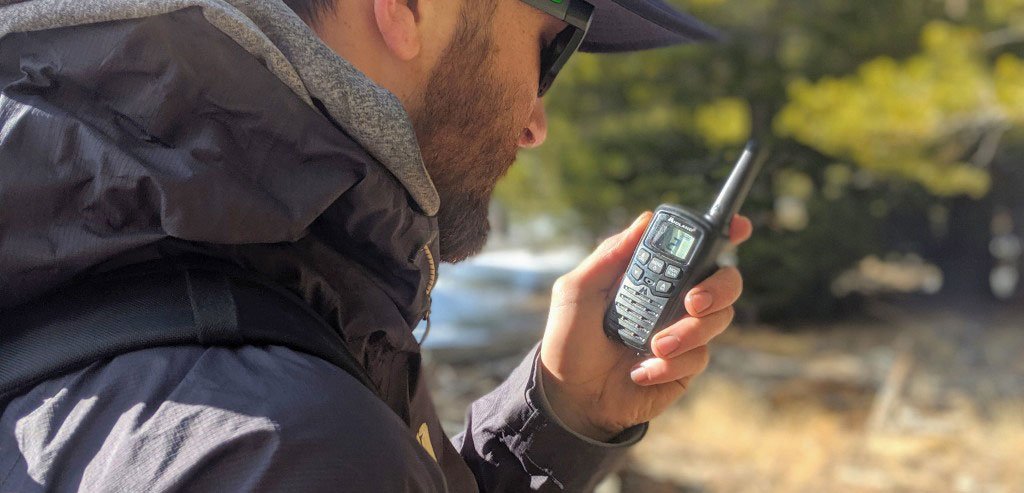
If you’re asking “What radio can reach 50 miles?”, you’re looking for something far more capable than a standard walkie-talkie. Achieving 50 miles of range is possible — and in some cases, you can even go far beyond that distance.
In this guide, we’ll explore:
- Radio types that can cover 50 miles or more
- The best models for each environment
- POC radios that provide unlimited range
- HF shortwave radios for extreme distances without cell networks
- Expert tips to maximize performance
Can a Radio Really Reach 50 Miles?
Yes — but with the right conditions and equipment.
Key factors that affect range include:
- Terrain & Obstacles – Mountains, forests, and buildings can reduce range.
- Antenna Height – The higher, the better.
- Frequency Band – VHF for open spaces, UHF for urban penetration.
- Power Output – Higher wattage generally increases range.
Types of Radios That Can Reach (or Exceed) 50 Miles
1. Marine VHF Radios – Best for Over-Water Communication
Open water with minimal obstructions is perfect for achieving 50 miles.
Recommended Model: ICOM IC-M605 – Fixed-mount, up to 25W, ideal for offshore use.
Best For: Sailors, fishermen, yacht owners.
2. High-Power GMRS Mobile Radios – Ideal for Land-Based Long Range
Vehicle-mounted or base-station GMRS radios with tall antennas can reliably reach 50 miles.
Recommended Model: Midland MXT500 MicroMobile – 50W output, excellent clarity.
Best For: Off-road groups, farms, convoy leaders.
3. HF / Shortwave Radios – Extreme Long-Distance Without Cell Networks
Shortwave radios (HF radios, 3–30 MHz) can communicate far beyond 50 miles by bouncing signals off the ionosphere.
Recommended Models: Yaesu FT-891, Icom IC-718.
Best For: Emergency communication, offshore sailing, remote expeditions.
Advantages: Works without internet or cell service; excellent for disaster readiness.
4. Professional DMR Radios with Repeaters – Reliable in Complex Terrain
DMR radios linked through repeater networks can cover 50 miles even in urban or mountainous areas.
Recommended Model: Motorola XPR 7550e.
Best For: Industrial operations, security teams, event management.
5. POC (Push-to-Talk Over Cellular) Radios – Unlimited Range
POC radios use 4G/5G or Wi-Fi networks, giving instant voice communication anywhere with coverage.
Recommended Models: Hytera PNC560, Motorola TLK 100.
Best For: Logistics, security, cross-country operations, event management.
Advantages: Global coverage, GPS tracking, group calling, no repeater setup required.
Best Radios by Scenario
| Scenario | Radio Type | Example Model | Why It Works |
|---|---|---|---|
| Sailing or offshore work | Marine VHF (25W) | ICOM IC-M605 | Clear line of sight over water |
| Off-road or rural travel | GMRS mobile (40–50W) | Midland MXT500 | Long range + mobile antenna |
| Emergency preparedness | HF shortwave | Yaesu FT-891 | Works without cell network |
| Industrial or security | DMR with repeaters | Motorola XPR 7550e | Consistent coverage |
| Nationwide / global ops | POC cellular radios | Hytera PNC560 | Unlimited range over mobile networks |
Expert Tips to Maximize Your Radio Range
- Increase antenna height – Every meter helps extend range.
- Pick the right frequency band – VHF for open space, UHF for urban, HF for extreme distances.
- Use the right power – More wattage helps, but follow legal limits.
- Consider repeaters or POC – For areas with coverage challenges.
- Stay compliant – Some radios require a license to operate.
Our Top Picks for 50-Mile (and Beyond) Radios
- Best for Marine Use → ICOM IC-M605
- Best GMRS Mobile → Midland MXT500 MicroMobile
- Best HF/Shortwave → Yaesu FT-891
- Best Industrial DMR → Motorola XPR 7550e
- Best Unlimited Range → Hytera PNC560
A 50-mile range is possible — and in some cases, you can go much further. From marine VHF to HF shortwave to POC cellular radios, the right choice depends on your environment and needs. Whether you’re crossing the ocean, managing a large operation, or preparing for emergencies, the right radio will keep you connected when it matters most.
Need help finding the right long-range radio? Contact us today for expert recommendations and competitive pricing.