How far do radio repeaters reach?
Why Radio Repeater Range Matters
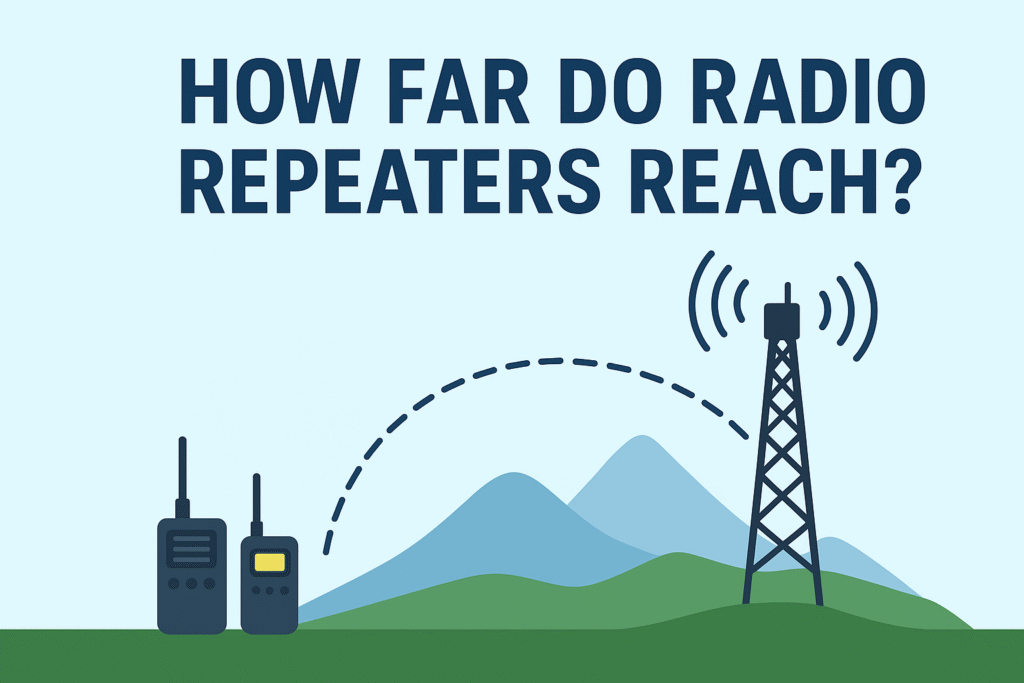
When businesses, emergency teams, or outdoor enthusiasts ask “How far do radio repeaters reach?”, they are really asking how reliable their communication will be in real-world conditions. A radio repeater extends the range of two-way radios by receiving and retransmitting signals, but its coverage isn’t unlimited. The actual distance depends on frequency, terrain, power output, and antenna setup.
In this article, we’ll break down the typical range of radio repeaters, the factors that affect coverage, and what you can expect in different environments.
What is the Typical Range of a Radio Repeater?
- Urban areas: 5–20 miles (8–32 km), due to buildings and obstructions.
- Suburban and rural areas: 20–50 miles (32–80 km).
- Line-of-sight with high elevation: Up to 100 miles (160 km) or more, especially when the repeater is mounted on a tower or mountain.
⚠️ Important: These numbers represent averages. Actual performance varies widely based on setup and conditions.
What Factors Affect Radio Repeater Range?
1. Frequency Band (VHF vs UHF)
- VHF (Very High Frequency): Travels further in open areas, better for outdoor, rural use.
- UHF (Ultra High Frequency): Penetrates buildings more effectively, ideal for cities or indoor operations.
2. Terrain and Obstructions
- Mountains, hills, and buildings can block signals.
- Placing repeaters on elevated locations significantly improves coverage.
3. Antenna Height and Gain
- Higher antennas = longer line-of-sight.
- Directional antennas can extend range in a specific direction.
4. Power Output
- Most repeaters operate between 25W–100W.
- Higher power extends coverage but requires proper licensing and regulatory compliance.
5. Weather and Atmosphere
- Temperature inversions, storms, or heavy rain can affect performance.
How to Maximize Your Repeater’s Coverage
- Install antennas on tall towers or rooftops.
- Choose the right band (VHF for open areas, UHF for urban).
- Use high-quality coaxial cables and connectors to reduce signal loss.
- Regularly maintain and tune the system.
Do You Need a License to Use a Radio Repeater?
Yes, in most countries repeater operation requires a license. Regulations vary, but businesses and organizations often apply for dedicated frequencies to ensure interference-free communication.
Choosing the Right Radio Repeater for Your Needs
If your team works across a construction site, mining field, or oil and gas operation, choosing a repeater with the right range and frequency band is crucial. For businesses operating across wide, remote areas, long-range VHF repeaters are ideal, while urban industries often benefit from UHF systems.
So, how far do radio repeaters reach? The answer depends on many factors, but most fall between 5 miles in dense urban areas to 100 miles in optimal conditions. By understanding the environment and investing in the right equipment, businesses can secure reliable long-range communication.
FAQ: How far can a radio repeater reach?
Most radio repeaters cover 5 to 50 miles, but with high elevation and ideal conditions, they may reach 100 miles or more.
FAQ: What factors affect radio repeater range?
The main factors are frequency band (VHF/UHF), antenna height, terrain, power output, and weather conditions.
FAQ: Do I need a license for a radio repeater?
Yes. In most countries, operating a repeater requires a license from the local communications authority.
FAQ: Is VHF or UHF better for long distance?
VHF performs better in rural and open areas, while UHF is more effective in cities where buildings block signals.
FAQ: Can one repeater cover multiple locations?
Yes, but usually through a linked repeater system, where multiple repeaters are connected to cover a large geographic area.
Looking to extend your communication range with professional-grade radio repeaters? As a trusted two-way radio supplier, we provide customized solutions for industries such as construction, energy, mining, and security.
👉 Contact us today to request a free consultation and get the right repeater solution for your needs.