
What Radios Do The Military Use
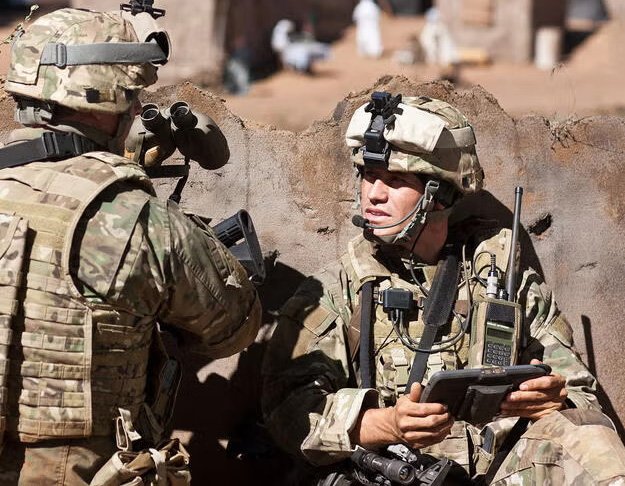
Military radio technology is a far cry from your standard walkie-talkie. Because soldiers operate in environments ranging from deep jungles to urban “canyons,” their equipment has to be rugged, encrypted, and capable of hopping frequencies to avoid jamming.
The military categorizes radios primarily by their form factor and the frequency bands they use.
1. Handheld & Manpack Radios
These are the most common tactical radios used by individual soldiers and small squads.
- AN/PRC-152 & AN/PRC-148 (MBITR): The gold standard for handhelds. They provide multi-band coverage (VHF/UHF) and allow for secure voice and data.
- AN/PRC-150 (HF): Used for long-haul communication. High Frequency (HF) can bounce off the ionosphere, allowing a soldier to talk to someone hundreds of miles away without a satellite.
- AN/PRC-117G: A “Manpack” radio (carried in a backpack). it’s a wideband powerhouse that handles everything from satellite communications (SATCOM) to high-speed data for sending images or video.
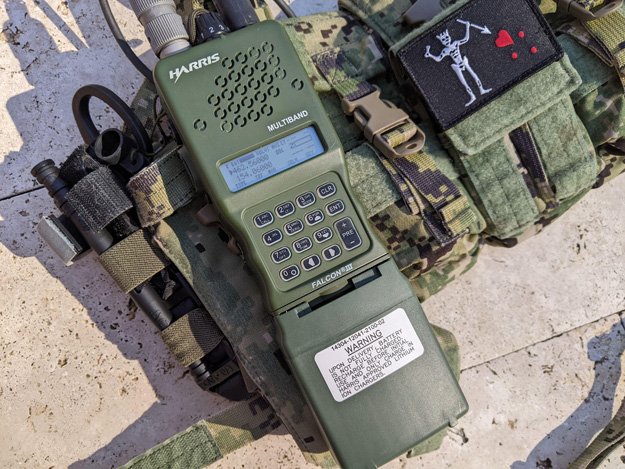
2. Common Frequency Bands
The military splits its communication across different parts of the electromagnetic spectrum depending on the mission:
| Band | Frequency Range | Primary Use Case |
| HF | 3 – 30 MHz | Long-range, “over-the-horizon” communication. |
| VHF | 30 – 300 MHz | Line-of-sight tactical FM voice (Ground-to-Ground). |
| UHF | 300 MHz – 3 GHz | Ground-to-Air, SATCOM, and high-bandwidth data. |
3. Key Features: Why They’re Different
Military radios aren’t just “louder”; they are built with specific survival features:
- COMSEC (Communications Security): They use advanced encryption (like Type 1) so that even if the enemy intercepts the signal, they only hear “white noise.”
- Frequency Hopping: To prevent jamming, radios like those using the SINCGARS (Single Channel Ground and Airborne Radio System) waveform switch frequencies dozens of times per second.
- Waveforms: Modern systems are “Software Defined Radios” (SDRs). This means the radio can change its entire behavior just by loading new software or “waveforms,” such as SRW (Soldier Radio Waveform) for networking.
4. Vehicle & Airborne Systems
Tanks, humvees, and jets use more powerful versions of the handhelds, often integrated into the vehicle’s power supply and massive antennas.
- Link 16: A specialized tactical data link used by aircraft and ships to share a “real-time” picture of the battlefield, showing where friends and enemies are located.