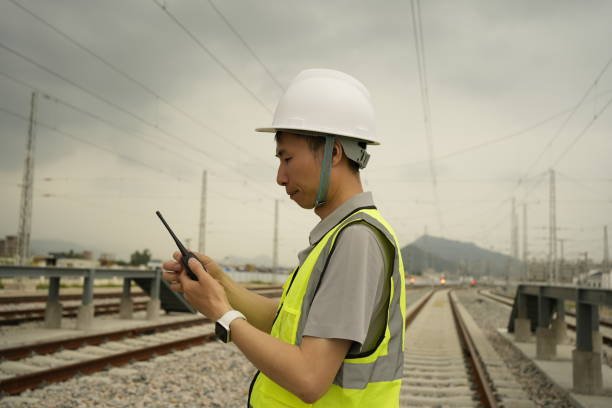
What Are the Benefits of Using a Digital Two-Way Radio for Security Compared to an Analog Model?
As security professionals increasingly rely on radio communications for rapid, reliable coordination, the choice between digital and analog two-way radios has become crucial. While analog radios have been the traditional standard, digital technology offers measurable advantages that can dramatically improve operational effectiveness — especially in noisy, complex security environments. If you’re evaluating an upgrade, here’s how digital radios deliver real value for modern security teams.
🎧 1. Significantly Better Audio Clarity
One of the most noticeable differences between digital and analog radios is voice clarity.
- Digital radios encode voice as data, using error correction to clean up noise, reduce static, and deliver clear communications even in challenging conditions. This means messages remain intelligible where analog radios may sound distorted or noisy.
- Analog systems simply transmit everything the mic picks up — including background noise — which can make communication difficult in crowded events or loud facilities.
For security teams where every word counts, especially during critical incidents, clear communication reduces errors and improves response time.
🔇 2. Enhanced Noise Cancellation
Security environments — such as stadiums, construction sites, or busy campuses — are often noisy. Digital radios use real-time processing algorithms that focus on the user’s voice and suppress background noise, improving intelligibility across the coverage area, including fringe reception zones.
This noise filtering makes digital radios especially valuable when teams operate in environments that would otherwise overwhelm analog systems, reducing the need to repeat or clarify messages.
🔋 3. Longer Battery Life for Extended Shifts
Battery life is a major operational consideration, especially for security teams working long events or night shifts.
- Digital radios are more energy-efficient, transmitting voice as bursts of data rather than continuously modulated carriers. This can result in up to ~40% longer battery life compared to analog radios.
- Longer battery life means fewer recharges, less downtime, and less need to swap spare batteries during critical operations.
This efficiency pays dividends during extended use — and ultimately lowers operating costs over time. (motorolasolutions.com)
📊 4. Greater Channel Capacity & Efficiency
Digital radio technology (like DMR) uses advanced techniques such as Time Division Multiple Access (TDMA) to effectively double the number of communication paths within the same RF channel bandwidth. (Hytera)
This means:
- More simultaneous conversations without interference
- Reduced congestion on busy networks
- Better use of licensed spectrum
For large security teams or events with many concurrent radio users, this increased capacity improves coordination and reduces delays.
📡 5. Advanced Features Beyond Voice
Digital two-way radios unlock capabilities that analog systems simply can’t match, including:
- Text messaging and status updates
- GPS tracking for asset and personnel location
- Private and group calling without extra channels
- Secure encryption to protect sensitive communications
- Emergency alarms and advanced safety features
These tools help security teams stay organized, maintain situational awareness, and respond faster — all while keeping communications secure from unauthorized listeners.
💡 6. Maintained Audio at Edges of Coverage
Even though analog and digital radios may transmit over similar distances with similar power, digital radios maintain audio quality right up to the edge of coverage, whereas analog audio typically degrades gradually into static.
This means:
- Clear voice communication even as a user moves farther from the base or repeater
- Fewer “dead spots” caused by interference or environmental noise
- Improved response and safety for teams spread across large venues
For security operations that extend over large buildings or outdoor venues, this can be a significant operational advantage.
📈 Why Digital Is Worth the Investment
While digital radios often have a higher upfront cost than basic analog models, the total cost of ownership — factoring in improved efficiency, fewer communication errors, reduced battery swaps, and advanced capabilities — often justifies the investment.
For security teams who rely on dependable, clear, and feature-rich communications, digital radios become a strategic asset, not just a tool.
Ready to Upgrade Your Security Communications?
If you’re considering moving from analog to digital radio systems — or evaluating digital models for the first time — we’re here to help. Contact us today to get expert recommendations and a tailored quote based on your site, team size, and coverage needs. Submit your inquiry now and take the first step toward more reliable, efficient, and secure communication!