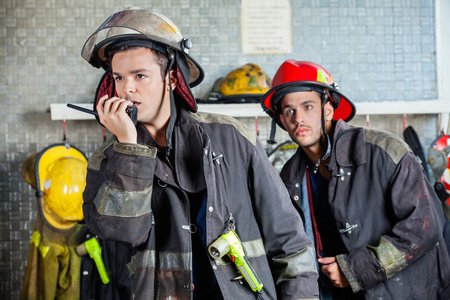
Training Protocols for Firefighters on Fire Department Radio Usage
Why Proper Training on Radio Usage Is Critical
Effective radio communication isn’t just convenient — for firefighters, it is a life-safety issue. In the chaos of fireground operations (smoke, noise, low visibility, heat, multiple crews), poor or unclear radio communication can lead to miscoordination, delayed response, injuries — or worse.
To prevent such outcomes, departments must treat radios as part of the essential gear — like personal protective equipment (PPE). Every firefighter operating on the fireground should have a portable radio, and must be trained properly in its use.
Core Principles: Radio Discipline, Simplicity & Standard Operating Procedures
A robust training protocol should begin with fundamental principles and standard procedures:
- Radio discipline: use radios only when needed (not for casual chatter), restrict transmissions to essential information, avoid tying up the channel unnecessarily.
- Clear Text & Plain Language: avoid jargon, slang, or ambiguous phrases. Use standardized plain-language terminology so all crews and agencies understand.
- Structured, Confirmed Communications: every transmission should follow a standard format — identify sender and receiver, state the message clearly and briefly, then receiver confirms receipt. This “communication loop” ensures messages are heard and understood.
- Priority & Emergency Traffic Protocols: define which messages take precedence (e.g. Mayday, “Emergency Traffic,” evacuation orders), and how to clear the channel for them. Ensure all personnel know and can execute these protocols under stress.
Recommended Radio Communication Models & Message Structure
Training should teach and reinforce specific communication models that work under stress. Two widely adopted frameworks:
The “Five C’s” of Radio Communication
As described in a guide to portable radio use:
- Concise — keep messages short.
- Clarity — speak clearly and in plain language.
- Confidence — transmit with certainty (no hesitation or guesswork).
- Control — manage tone/volume; avoid shouting, shouting over background noise, or panicked voices.
- Capability — practice regularly so communication becomes second nature.
When using this approach, firefighters should hold the mic 1–2 inches from their mouth and speak in a steady, controlled voice; avoid slang or profanity.
Standard “Connect–Convey–Confirm” / “Communications Loop” Model
A simple, repeatable procedure to ensure every message is acknowledged and understood:
- Connect — Identify who you are calling and who you are (e.g. “Engine 5 to Command”).
- Convey — Deliver the message (e.g. “Engine 5, 1¾-inch line to Side Alpha, 2nd floor for fire attack”).
- Confirm — Receiver repeats or acknowledges (e.g. “Engine 5 received, 1¾-inch line to Alpha, 2nd floor”).
This method reduces misunderstanding and ensures the sender and receiver are synchronized.
Essential Training Elements & Routine Drills
To embed good radio use habits, departments should include the following in their training regimens:
- Equipment Familiarization: Every firefighter must know how to operate their assigned portable radio — including mic usage, channel selection, emergency button (e.g. Mayday), volume control, etc. Especially critical while wearing full PPE or SCBA.
- Standard Operating Procedures (SOPs) for Communications: Formal written procedures that cover routine transmissions, emergency traffic, change-of-command, multi-channel incidents, mutual aid, mayday procedures, roll-calls / PARs, evacuations, etc.
- Scenario-Based Training & Drills: Regular drills in realistic conditions — smoke, noise, limited visibility — so firefighters practice using radios under stress, coordinating with team members, sending and acknowledging critical info, executing mayday, etc.
- Communication Flow & Incident Reporting Discipline: Teach crews the flow: initial size-up, periodic status updates, changes in strategy, resource needs, hazards. Avoid “noise” — only essential info goes on radio.
- Mayday / Emergency Traffic Procedures: Specific protocols for urgent calls — unique terminology (e.g. “Mayday”, “Emergency Traffic”), channel-clearing procedures, acknowledgement, rescue coordination.
- Post-Incident Review & Communication Audits: After each incident or drill, review radio logs, recordings (if available), identify communication breakdowns, reinforce correct procedures, identify training needs.
Organizational & Policy Recommendations
For training protocols to succeed uniformly:
- Assign a radio to every firefighter on scene — radios are as necessary as PPE. No firefighter should rely solely on shared apparatus-mounted radios.
- Involve all levels of staff — from newest recruit to department leadership; everyone must understand and support radio discipline and communication protocols.
- Establish written SOPs / SOGs for radio use, covering all relevant situations (routine operations, mutual aid, multi-agency incidents, emergencies, mayday, evacuations, equipment failures).
- Encourage culture of clear communication and listening — emphasize that radio is a tool for safety and coordination, not convenience; discourage overuse and non-essential chatter.
- Maintain and update training regularly — incorporate periodic refresher courses, drills, audits, and lessons learned from real incidents.
Benefits of Effective Radio Training & Protocols
When properly implemented, structured radio training and disciplined communication protocols can yield significant operational and safety benefits:
- Clear, reliable communication even in chaotic, noisy, high-stress environments (fire scenes, rescue operations).
- Reduced risk of miscommunication, lost messages, radio congestion or interference, leading to better coordination among crews, commander, dispatch, and support agencies.
- Faster, safer decision-making and resource deployment, because messages are timely, accurate, and understood.
- Improved firefighter safety, especially in hazardous or low-visibility conditions — reliable radio contact can mean the difference between rescue and tragedy.
- Better after-action review and training feedback, enabling continuous improvement of communication practices and operational procedures.
Radio communication is not an optional “nice-to-have” — for fire departments, it’s a core component of safe, effective operations. But radios alone aren’t enough. Without clear protocols, disciplined use, and consistent training, even the best equipment can fall short when it matters most.
By implementing standardized training protocols — covering proper radio use, message structure, mayday procedures, radio discipline, and regular drills — departments can ensure that when the alarm sounds, crews communicate clearly, coordinate effectively, and respond safely.
Ready to Build or Improve Your Department’s Radio Training Program?
If you’re looking to formalize radio usage training in your fire department, we can help. We offer radio-communications training plans, SOP/SOG drafting, scenario-based drills, radio-usage audits, and post-incident communication reviews designed to improve clarity, coordination, and safety.
Contact us today to discuss a custom radio-training program that fits your department’s size, call volume, and operational needs.