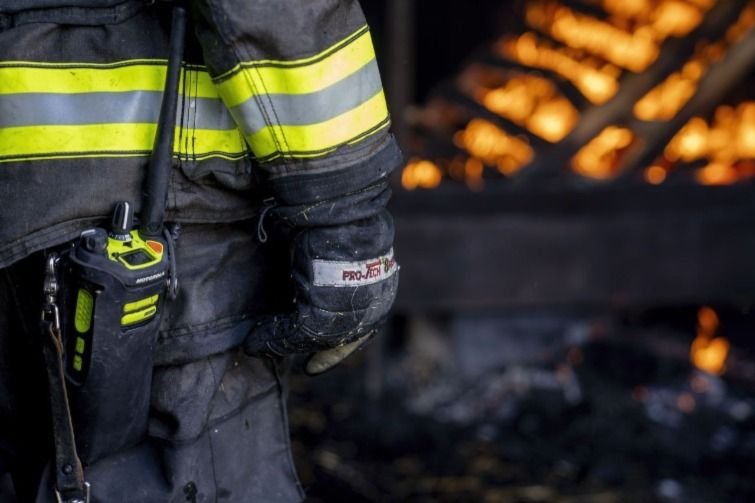
Tactical Communications and Fireground Operations Fire Department Radio
Tactical Communications and Fireground Operations — Fire Department Radio on the Fireground
Why Structured Fireground Communications Matter
On the fireground — where chaos, noise, and danger are the norm — communication is as critical as turnout gear or breathing apparatus. Clear and reliable radio communications help ensure:
- Effective command and control of multiple teams
- Crew safety and accountability
- Rapid response to changes (fire spread, rescuing victims, mayday calls)
- Efficient coordination across companies, divisions, and mutual-aid partners
When communications are disorganized, overloaded, or unclear, the risks increase: mis-assignment, confusion, missed urgent messages, or worse — endangering firefighters and civilians.
Communication Layers: Dispatch, Command, Tactical, Support — Why Multiple Channels/Talk-Groups Are Used
The communication needs during an incident typically occur at different “levels,” similar to a military structure.
- Strategic (Dispatch/Regional): The dispatch center oversees city- or area-wide coordination, resource allocation, incoming units, mutual aid, and overall response capacity.
- Command/Incident Command Channel: The “brain” of the operation — used by the incident commander (IC) or command staff to coordinate divisions/groups, request additional resources, manage overall incident strategy, and liaise with dispatch.
- Tactical / Fireground Channel (Talk-group / Simplex / Direct Mode): Used for on-scene, direct communications among crews (interior attack teams, search/rescue crews, ventilation teams, etc.) and between crews and Command. This is where “fireground-level” decisions, status reports, and immediate tactical communications happen.
- Support / Backend Channels (Staging, Rehab, Logistics, Ambulance, Investigations, etc.): For non-critical or support functions — keeping tactical channels clear for urgent fireground comms.
When incidents are large or complex, assigning separate channels (or talk-groups) for different divisions, functions, or operational groups helps prevent “radio traffic overload,” ensures critical transmissions don’t get lost, and keeps communication organized.
Typical Assignment of Talk-Groups / Channels at an Incident
Many fire departments adopt standard operating procedures (SOPs) that define how talk-groups / channels are assigned for incidents. A common pattern:
- Initially dispatch all units on the standard dispatch channel.
- Upon arrival and staging, the Incident Commander (or first-in officer) designates a tactical (“fireground”) channel / talk-group for on-scene crews. All crews switch to this channel before entering the fire building.
- For major incidents or multi-company responses, a separate Command channel/talk-group is established so the IC / command staff can communicate with dispatch or support units without clogging the tactical channel.
- Support functions (rehab, staging, logistics, EMS, outside resources) may be assigned additional channels to avoid interfering with tactical traffic.
As an example, some departmental SOPs define two talk-groups at multi-company incidents: a “B# IC” (command) group and a “B# FG” (fireground / tactical) group. All companies monitor both while responding.
Effective Communication Strategy on the Fireground — Best Practices
Here are key recommended practices for fireground radio communications — to maximize clarity, minimize interference, and enhance safety:
Use Plain Language & Standardized Terminology
- Avoid codes, slang, or improvised terms — use clear text / plain English so all crew members, mutual aid partners, or multi-agency responders understand regardless of origin.
- Establish a department-wide “playbook” or glossary of tactical commands, size-up reports, status updates, and tactical orders so radio messages stay concise and unambiguous.
Follow a Structured Communication Model (e.g. Connect–Convey–Confirm)
Many fire departments use a formal model for radio transmissions to ensure messages are understood and acknowledged. For instance:
- Connect — Identify sender and receiver (e.g. “Engine 5 to Command”).
- Convey — State the message concisely (“Engine 5 on Side A, 2nd floor, smoke showing”).
- Confirm — Receiver repeats or acknowledges (“Engine 5 received. Side A, 2nd floor smoke showing.”)
This communication loop reduces misunderstandings and ensures clarity under stressful, noisy conditions.
Keep Radio Discipline — Minimize Unnecessary Traffic
- Use radio only when necessary. Face-to-face communication is preferred when possible.
- Before pressing the push-to-talk (PTT), think through what you need to say: avoid rambling, reduce background noise (especially with SCBA on), and speak clearly with controlled volume.
- Use “emergency traffic,” “mayday,” or “priority traffic” procedures when urgent/critical messages or emergencies occur — these protocols must be well-known by all personnel and only used when necessary.
Maintain Span of Control — Use Groups/Divisions and Assign Leaders
For larger incidents, rather than have the IC directly coordinate every crew, organize crews into groups or divisions (e.g. fire attack group, search group, ventilation group). Assign a group supervisor (company officer) — command talks to group supervisors, and group supervisors relay to their crews. This reduces radio traffic and improves efficiency.
Ensure Radios Are Carried Properly and Always On
- Radios should be worn in a consistent, secure location (e.g., in a harness under turnout gear), with mic/strap accessible even when wearing SCBA or gear.
- All personnel should monitor the appropriate tactical channel throughout the incident — even when not actively transmitting — to maintain situational awareness and safety.
Common Pitfalls & Danger Zones — What Can Go Wrong Without Proper Communication Discipline
Even with radios and talk-groups, misuse or poor procedure can lead to serious issues:
- Channel overload / congestion — too many people transmitting on one tactical channel can drown out critical messages (e.g. Mayday, urgent requests). In worst-case scenarios, responders inside a building may miss life-saving warnings or evacuation orders.
- Mixing tactical and dispatch traffic — if teams stay on dispatch channel (instead of switching to tactical) once on scene, the channel can become cluttered, delaying critical fireground communications.
- Poor or unclear messages — without a structured communication model, messages may be misunderstood, repeated, delayed, or ignored. In high-stress situations, ambiguity or chatter increases risks.
- Lack of channel discipline or equipment misuse — radios not worn properly, mic blocked, accidental “open mic,” or failure to monitor appropriate channel — all can lead to missed communications.
Such communication failures have been repeatedly identified in after-action reports and investigations as contributing factors in firefighter injuries, entrapments, or fatal incidents.
Setting Up Your Department’s Tactical Communications Plan — A Suggested Framework
If you’re drafting or revising a communications plan for your fire department, consider including the following components:
- Pre-defined channel/talk-group allocations — dispatch, command, tactical (fireground), support (rehab, staging, EMS, etc.).
- Standard operating guidelines (SOGs) for channel/talk-group use — when to switch to tactical, when to establish a command channel, which channel for support functions, etc.
- Common language / terminology dictionary (plain English) — for size-ups, status reports (CAN: Conditions, Actions, Needs), tactical commands.
- Radio communication model (e.g. Connect-Convey-Confirm / 5Cs / Communication Order Model) for all transmissions.
- Channel discipline & usage rules — who transmits when; when to use face-to-face vs radio; limiting non-essential traffic; emergency/Mayday protocols.
- Assignment of group/division structure for large incidents — designate group supervisors, assign their crews, and ensure chain-of-command communication flow.
- Training & drills for radio use under realistic conditions — including SCBA, noise, limited visibility, stress, building entry, size-ups, role-play.
- Radio gear management policy — ensuring every firefighter carries a properly configured radio, mic accessible, common strap placement, regular equipment tests.
Effective tactical communication on the fireground isn’t just about having radios — it’s about structured planning, disciplined procedures, clear language, and constant training. When done right, fireground talk-groups and channel assignments — combined with rigorous communication discipline — allow incident commanders and crews to operate with clarity, coordination, and safety, even under the most chaotic, dangerous conditions.
But when such discipline is lacking — channel overload, mixed traffic, unclear messaging — communication failures can endanger lives and jeopardize operations.